Crossing the Border Without Leaving the Couch: The Economics Behind America's Cheap-Meds Migration
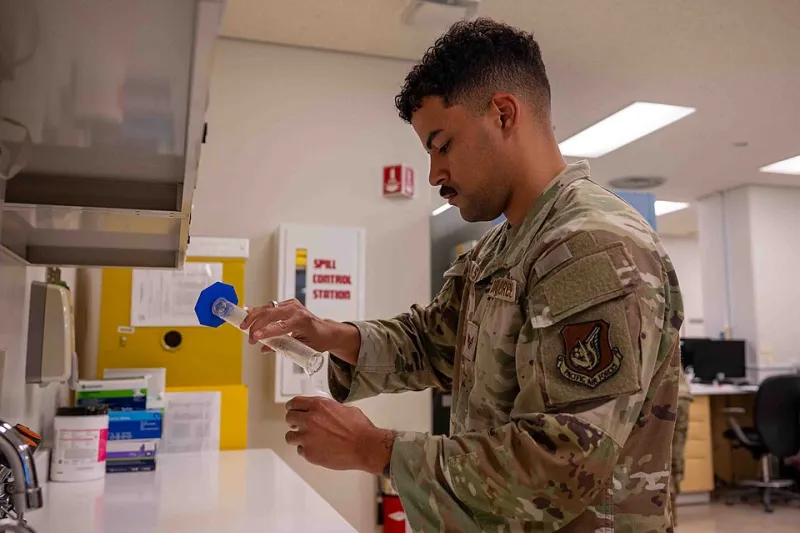
Photo: Airman Valerie Monroy, Public domain, via Wikimedia Commons
There's a particular kind of anger that shows up at the pharmacy counter in America. It looks like a retiree splitting pills in half. It sounds like a parent asking the pharmacist which refill can wait until payday. And lately, it's turned into something bigger: a quiet migration of patients finding their medications through online marketplaces, international sellers, and gray-market channels that regulators would rather you not think about too hard.
This isn't a fringe movement anymore. It's a mainstream response to a pricing system that has failed a lot of people. So let's talk honestly about what's happening, what it costs, and what nobody in a position of authority seems willing to say out loud.
The Sticker Shock That Started It All
Start with the numbers, because the numbers are the whole story.
- Insulin: The same vials that cost roughly $25–$35 in Canada have routinely listed for $300+ in the US without insurance. Even with recent caps, cash prices remain wildly inconsistent by zip code.
- EpiPens: A two-pack that cost about $100 a decade ago has hovered north of $600 for years. The active ingredient — epinephrine — is cheap and off-patent.
- Humira: Before biosimilars arrived, this arthritis drug ran around $6,000 a month in the US. In parts of Europe, the equivalent cost a fraction of that.
- Atorvastatin (generic Lipitor): Often under $15 for a 90-day supply internationally, versus $40–$75 at some US pharmacies for uninsured patients.
When the identical molecule sells for a 10x markup based purely on geography, patients don't experience that as a market. They experience it as a toll. And people have always looked for ways around tolls.
Why the Underground Economy Works
Here's the uncomfortable truth: the reason Americans cross borders and browser tabs is that the alternative — the official, sanctioned, insurance-navigating path — is often slower, more expensive, or both.
The US pays list prices that no other developed country pays, partly because other governments negotiate directly and partly because the American system layers rebates, middlemen, and pharmacy benefit managers on top of everything. By the time a drug reaches your counter, the price reflects a negotiation you weren't invited to.
So patients do the math. A fixed income doesn't stretch. A high-deductible plan means paying full freight until April. And a website offering the same pill for a quarter of the price starts looking less like a gamble and more like a lifeline.
The Safety Question — Answered Straight
Now for the part that deserves real talk rather than scare tactics or cheerleading.
The legitimate risk is real. Counterfeit medications exist. Sites with no verifiable pharmacist, no physical address, and prices that seem too good to be true are, most of the time, exactly what they appear to be. Fake semaglutide, counterfeit blood pressure meds, and tainted weight-loss drugs have all shown up in enforcement actions.
But the picture is more nuanced than "online equals dangerous." There's a meaningful difference between a verified international pharmacy that requires a prescription, employs licensed pharmacists, and ships from a regulated facility — and a random storefront selling "generic everything" via a contact form. Tools like LegitScript certification and the NABP's verification programs exist precisely to help you tell the difference.
What Regulators Won't Tell You
The FDA's official position is that importing medications for personal use is generally illegal. That's true. What's also true: personal importation for many drugs has been informally tolerated for decades, FDA guidance includes discretion for certain situations, and several states have moved toward importation programs of their own. Meanwhile, Congress has repeatedly debated legalizing importation and repeatedly not finished the job.
The gap between the law on paper and the enforcement reality is where millions of patients live. Regulators won't tell you it's fine, because it isn't their job to say so. They also haven't made the legal alternative affordable, which is why the gap persists.
Practical Rules If You're Considering It
We're a money-saving site, so here's the pragmatic checklist:
- Verify before you buy. Look for a verifiable license, a licensed pharmacist contact, and a requirement for a prescription when one is legally needed.
- Be extra careful with injectables, biologics, and temperature-sensitive drugs. Insulin and GLP-1s are the worst candidates for sketchy shipping chains.
- Compare domestic discount programs first. GoodRx, manufacturer savings cards, and 340B-covered clinics sometimes get you closer than you'd expect — without any legal gray area.
- Talk to your doctor or pharmacist. They've heard this before, and a good one will help you find a safe affordable route rather than lecture you.
The outrage that built this movement isn't going anywhere until the price gap does. Until then, patients will keep doing what patients have always done: finding a way.