Say This, Not That: Scripts for Getting the Cheap Version of Your Prescription
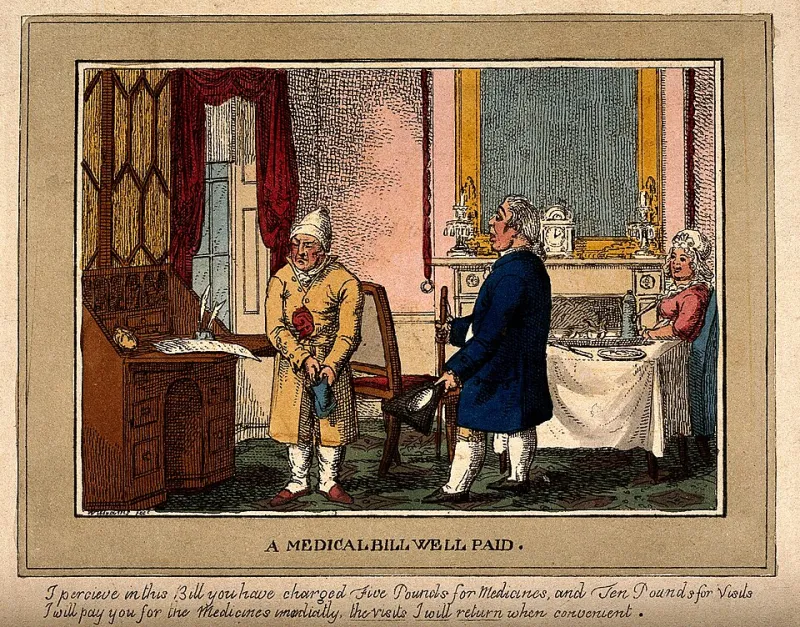
Photo: Unknown, CC BY 4.0, via Wikimedia Commons
Here's an uncomfortable truth about your last doctor's visit: nobody in that exam room was thinking about your wallet. Not because your doctor doesn't care — most of them genuinely do — but because the default setting of American medicine is prescribe first, ask questions never. The brand name comes out of the pen, the script gets printed, and you find out at the pharmacy counter that the thing costs $187 with insurance.
It doesn't have to go that way. The single cheapest intervention in American healthcare costs nothing and takes about ten seconds: opening your mouth before the prescription is written. Here's how to do it without feeling like you're haggling over a used car.
Why Doctors Reach for the Brand Name First
A quick peek behind the curtain. When a new drug hits the market, its manufacturer spends years and a genuinely staggering amount of money making sure it's the first name that comes to mind — for patients and prescribers. Rep visits, journal ads, conference booths, free starter packs. It works. Studies have consistently shown that physicians default to newer, heavily marketed drugs even when an older generic does the same job for a fraction of the cost.
Add to that the fact that your doctor usually has no idea what anything costs. Pricing is opaque even to people inside the system. So the brand name isn't a conspiracy against you — it's just inertia. And inertia is fixable with one sentence.
The Ten Seconds That Save You Hundreds
You don't need a speech. You need one line, delivered before the pen touches the pad. Here are the ones that work:
The direct ask:
"Before you write that — is there a generic version, and how much does it usually run?"
The budget-honest version:
"Money's tight this month. What's the most affordable option that still works?"
The older-drug play:
"Is there an older medication that's been around long enough to go generic? I'm fine with the well-established one."
That last one is the sleeper move. Some of the most battle-tested drugs in the pharmacopeia — the ones that have been treating people successfully since before you were born — cost pennies a pill precisely because they're old. New isn't always better. Sometimes new just means expensive.
What It Sounds Like in Real Life
Let's play it out. You're in for seasonal allergies, and the doctor starts writing for the shiny new antihistamine from the TV commercial.
You: "Quick question — how does that compare to the generic loratadine at the grocery store?"
Doctor: "They're similar, honestly. The newer one lasts a bit longer for some people."
You: "Let's start with the generic, then. If it doesn't cut it, I'll come back."
Done. That's the whole interaction. Nobody was offended. You just saved yourself roughly $30 a month on something you'll take forever.
Here's a harder one — the chronic condition where the doctor wants you on the latest and greatest:
Doctor: "I'd like to start you on [brand-name drug]."
You: "What's my out-of-pocket on that? I ask because I've been burned before by prescriptions that turned out to cost a fortune."
Doctor: "It varies. Some people hit their deductible and it's cheap."
You: "I'd rather not gamble. Is there a generic in the same class we could try first? If it doesn't work for me, I'm happy to upgrade."
Notice the structure: you're not refusing care, you're proposing a sequence. Try the cheap thing first, escalate if needed. That's a proposal almost no doctor will fight you on.
When the Doctor Pushes Back
Sometimes they will, and it's worth knowing why. Legitimate reasons a doctor might insist on the brand or newer drug:
- No true generic exists (an "authorized generic" or generic equivalent may still be an option — ask)
- You've already failed the cheaper alternative (fair — time to pay up)
- The generic has a narrow therapeutic index, meaning small variations matter, as with some seizure or thyroid meds
- A patient-assistance program makes the brand cheaper than the generic (it happens — ask them to check)
If the pushback is none of those and just feels like habit, it's fair to ask one more question:
"Can you help me understand why this one over the generic? I want to make sure I'm not missing something."
That phrasing — "help me understand" — invites an explanation instead of triggering a defense. If the reasoning is solid, great, you learned something. If it's "the rep said it's better," you have your answer.
Do a Little Homework Before You Go
Ten minutes on your insurance company's drug formulary (search "[your insurer] formulary" — it's a public PDF, usually) tells you which tier your meds fall on. The GoodRx app or website shows cash prices at pharmacies near you, which is genuinely useful intel to bring into the room. Walking in knowing that Drug A runs $4 and Drug B runs $140 changes the entire conversation.
And once you've scored that affordable script? That's where we come in. Comparing prices across pharmacies — including mail-order and online options — on a med you'll take for years is one of the highest-return five minutes in personal finance. A $12 difference a month is $144 a year, on one medication. Most people are on more than one.
The Bottom Line
Bringing up money at the doctor's office isn't cheap. It's smart. Your doctor has thirty seconds of attention to allocate and a pen full of brand names; the cost conversation only happens if you start it. One sentence before the prescription is written beats a hundred phone calls after the damage is done.
Say the line. Skip the sticker shock.
This article is for informational purposes and isn't medical advice. Always follow your prescriber's guidance on which medication is right for you.